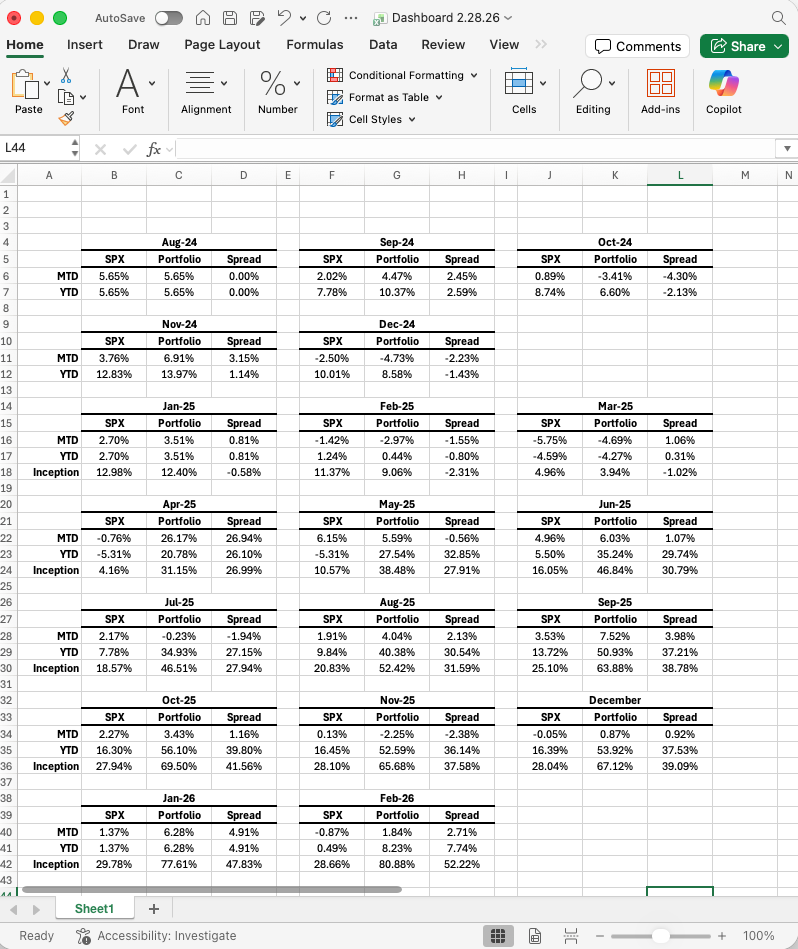
Pinebrook returned 1.84% versus the S&P500 performance of -.87%.
The outperformance spread was 271bps for the month.
YTD as of close of February 2026, PB is at 8.23% return versus 49-bps for the broader market, for 774-bps in YTD outperformance.
The theme of the month was managing risk in a choppy range bound market that had negative overhangs in U.S. tech, software and financials, and a negative geopolitical overhang with Iran.
As part of the Mag7 => 493 rotation these that these pages have championed for the past few months, Pinebrook positions avoided the worst PNL consequences of the tech rotation.
Trimming European exposure (EPOL, EWP, EWU) was net neutral.
There were two big misses in February.
Missing the long energy trade as the drums of war beat harder regarding Iran.
A long in KRE, the mid-cap financial ETF, on the basis of Kevin Warsh’s deregulation agenda for smaller, non-SIFI (systemically important financial institutions) banks. The negative catalyst was bank exposure to software SAAS companies that faced threats of AI destroying traditional software business models.
The short call spread on gold miners continued to provide negative PNL. Losses there are capped due to the hedged nature of the trade and the worst of the PNL is likely in the rear-view mirror.
Miners are above the strike prices of the calls; there is no more price upside to the long side trade.
As we approach the March 20th expiration date, these options will experience “theta burn”, or time decay.
As we approach the expiration day, volatility associated with the strikes will fall and reduce the value of the call options.
Stand out trades were:
The re-entry into S. Korea (EWY).
The mid-cap industrial basket championed on February 3rd, along with legacy large cap plays in industrials (XLI) and materials (XLB).
The ITA defense ETF.
The taking of profits and closure of the short silver trade on February 2nd.
While the month was a struggle, we managed the most important thing in money management: positive compounding in the face of a negative market.